Back to blog
Anxiety & Stress
How to Calm Your Nervous System: 4 Grounding Techniques for Anxiety and Stress
Written by Tina Esposito
March 12, 20265 min read
Anxiety & Stress
Written by Tina Esposito
Have you ever noticed yourself holding your breath when you're stressed, overwhelmed, or anxious?
When our nervous system senses danger - whether it's a real threat or simply a stressful situation - our bodies automatically shift into survival mode. Our heart rate increases, our muscles tense, our thoughts race, and many of us unknowingly begin holding our breath.
The good news is that your body also has a built-in calming system. Grounding techniques can help signal safety to your nervous system, allowing you to feel more present, connected, and in control.
Here are a few simple techniques you can use when anxiety, stress, or overwhelm begin to take over.
Breathing is one of the quickest ways to communicate safety to the nervous system. Because breathing is automatic, we often don't realize when stress has changed our breathing patterns.
Try this simple exercise:
As you continue, notice any signs that your body is beginning to settle. You may feel your heart rate slow, your shoulders soften, your jaw unclench, or your thoughts become less frantic.
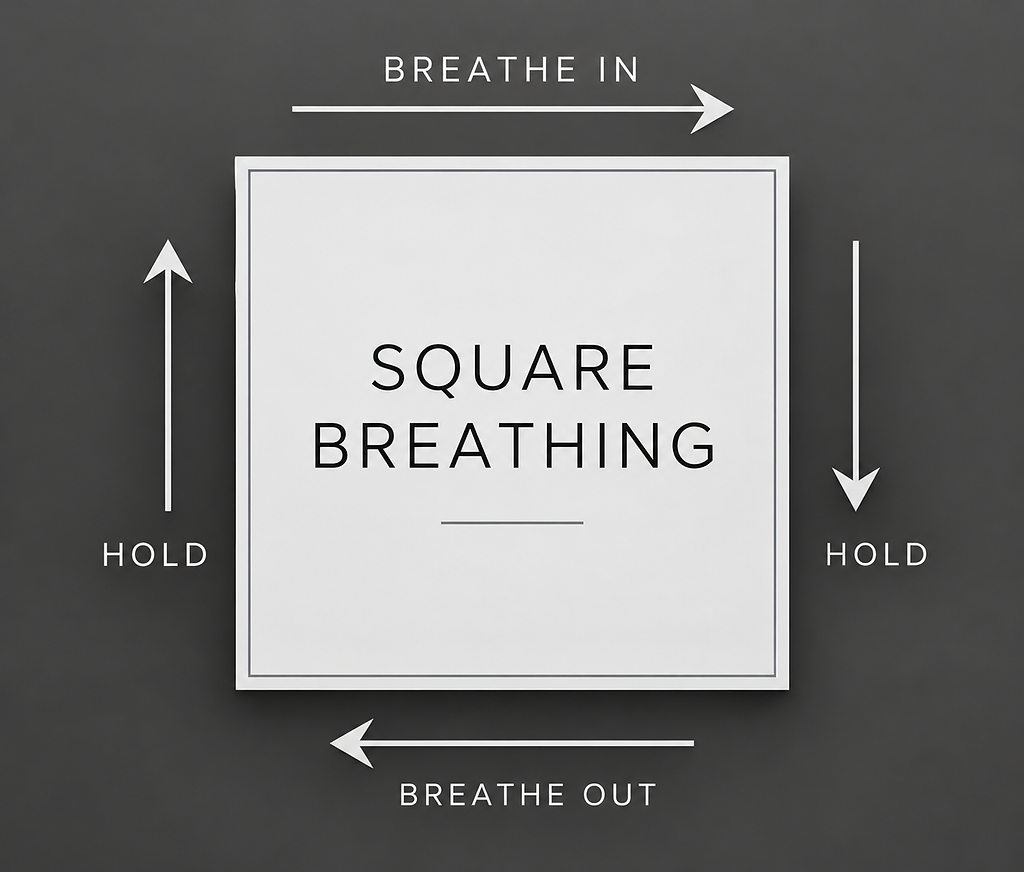
Square breathing (also called box breathing) is a simple grounding exercise that combines breath with visual focus.
Since we're surrounded by squares and rectangles every day, find an object nearby - a picture frame, television, window, notebook, or computer screen.
As your eyes trace each side of the square:
Continue tracing the shape as you repeat the cycle, allowing your attention to stay focused on both your breath and your surroundings.
Visualization can be a powerful way to calm both the mind and body.
Take a moment to imagine a place where you feel safe, peaceful, or completely at ease. This can be a real place you've visited or one you create in your imagination.
Close your eyes and explore the scene in detail:
Picture yourself in this environment as vividly as possible. Allow yourself to fully experience the comfort, calm, and safety it provides.
Stay with the image until you notice your body beginning to relax.
Stress often lives in the body long before we're consciously aware of it. Progressive Muscle Relaxation helps release tension while strengthening the connection between mind and body.
Find a comfortable position and begin by focusing on your feet.
Slowly move upward through your body - legs, hips, stomach, hands, arms, shoulders, and face - tensing each muscle group for a few seconds before letting it go.
As you move through the exercise, allow your body to soften with each exhale.
Grounding isn't about forcing yourself to relax or making difficult emotions disappear. Instead, grounding helps you reconnect with the present moment so your nervous system can recognize that you're safe right now.
The more consistently you practice these techniques, the easier it becomes to shift out of survival mode and return to a place of calm, balance, and connection.
If anxiety, stress, or past experiences continue to leave you feeling stuck in survival mode, working with a trauma-informed therapist can help you develop deeper tools for nervous system regulation and lasting healing. When appropriate, EMDR may also be incorporated to help process past experiences that continue to influence how you feel and respond today.
Book a free 15-minute consultation with Tina.